Are stairs worth the space you gain, or will a single level serve you better for years to come? If you are buying in Walnut Creek, that question meets real tradeoffs tied to lot sizes, hillsides, commute routes, and future plans. You want a home that fits your life now and later without surprise costs. In this guide, you will learn how single-story and two-story homes perform in Walnut Creek, what to check on each parcel, and how to plan your next steps with confidence. Let’s dive in.
How Walnut Creek shapes your choice
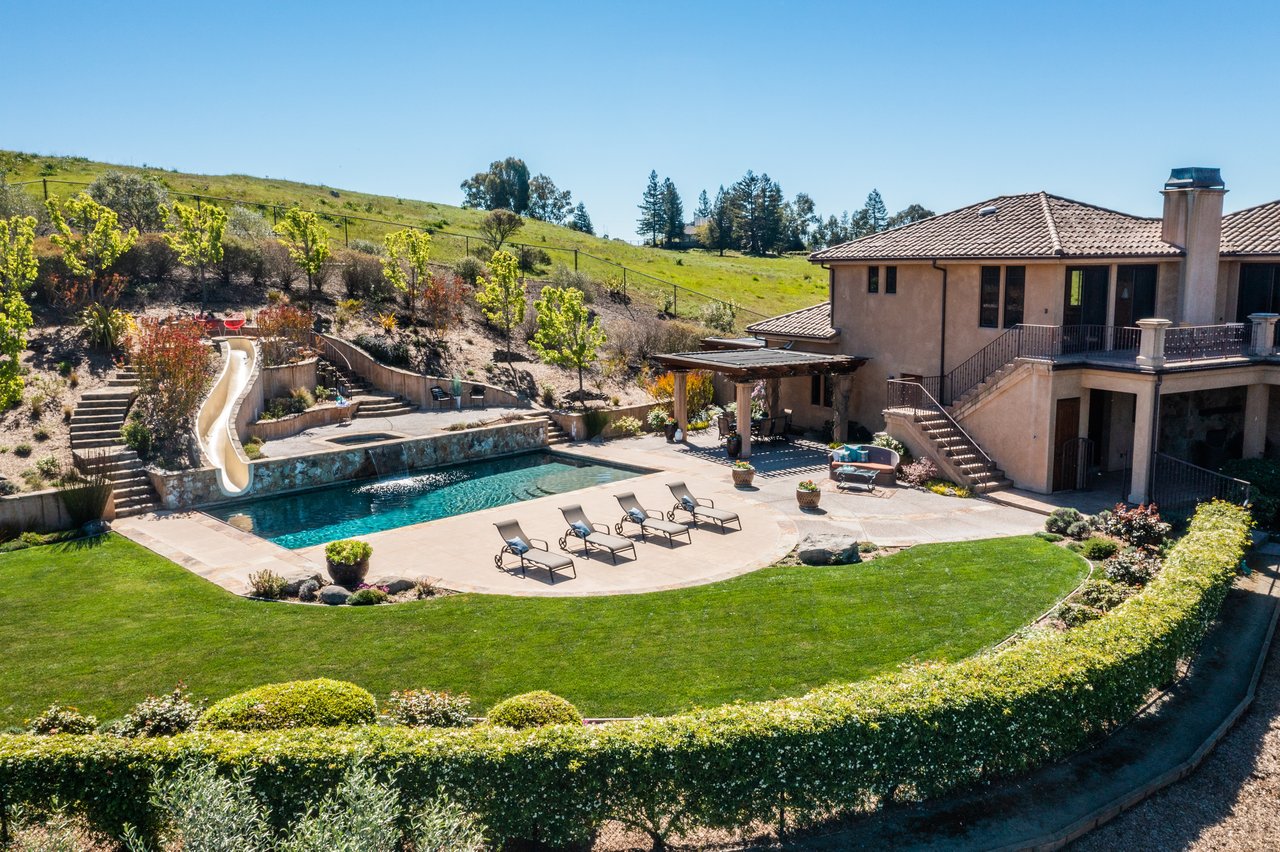
Walnut Creek blends downtown living and traditional subdivisions with hillside neighborhoods. Central, flatter areas often have smaller lots and older bungalows. Outlying and hillside pockets can offer larger parcels and custom homes. Your ideal story count often depends on lot size and slope.
Commuters value access to BART and key arterials. If you want yard space for play or entertaining, footprint efficiency matters. Two-story homes give more interior square footage on a smaller footprint. Single-story homes spread out and need more usable lot.
Neighborhood character also matters. A home that aligns with the surrounding streetscape tends to show and appraise more smoothly. Ask your agent for recent sales that match the story count and lot type you are targeting.
Single-story vs two-story at a glance
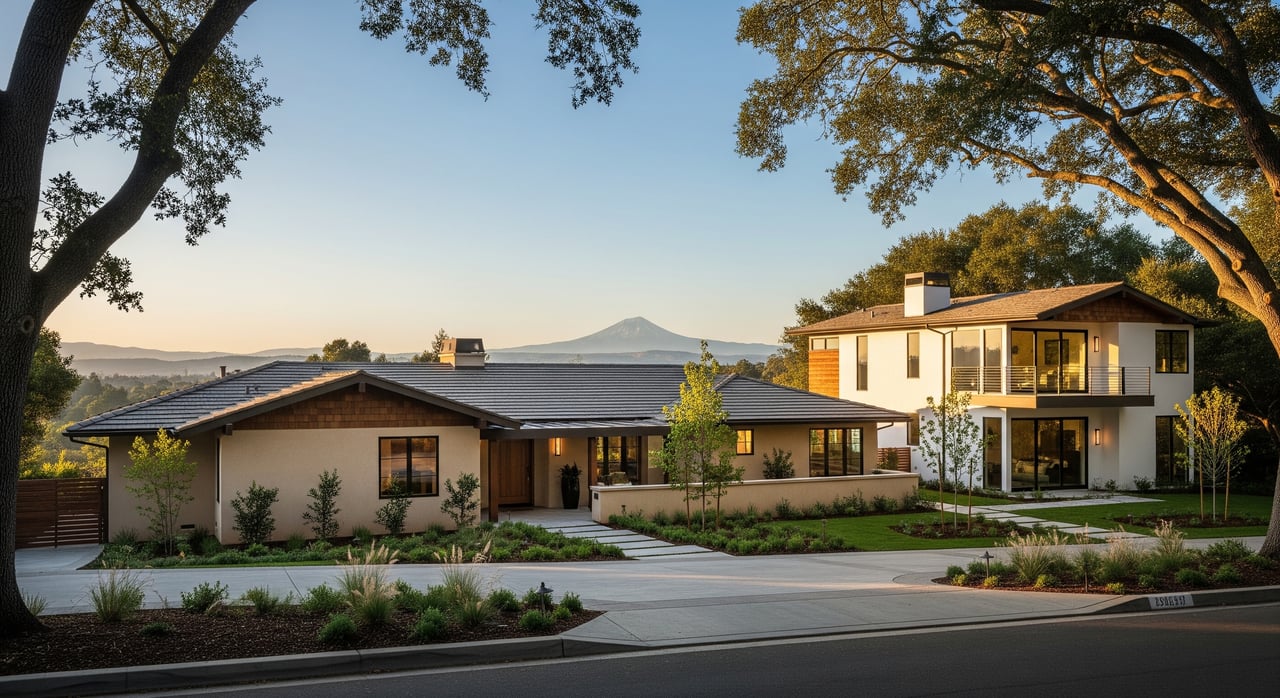
- Single-story: No stairs, easy daily flow, often preferred for aging in place. Needs a larger lot for the same square footage. Roof and foundation cover more area, which can affect build cost. Maintenance like roof work can be simpler.
- Two-story: More living space on a smaller footprint, which helps on tight lots. Separation of public and private zones is easy to achieve. Stairs are a consideration for accessibility and future mobility.
Lot, footprint, and expansion potential
Central neighborhoods and smaller lots
In denser central neighborhoods with limited lot width, a two-story layout can deliver the space you need and preserve yard for outdoor living. If you want a larger interior without giving up patio or play areas, a two-story plan may be a better fit.
Key questions to ask:
- What is the lot size and usable yard area?
- Are there easements, heritage trees, or setbacks that limit a future ground-level addition?
- Is the current footprint near maximum lot coverage or floor area ratio (FAR)?
Hillside parcels and site complexity
Hillsides introduce slope, drainage, retaining walls, and potential foundation engineering. These can add cost whether you expand out or up. Single-story builds on steeper lots can be challenging because they require more graded area. Two-story designs can reduce the footprint, but structural and geotechnical needs still matter.
Key questions to ask:
- What do the site plan, soils report, or past permits say about slope stability and foundation work?
- Could a second-story addition trigger structural upgrades to the existing home?
- Are there drainage or earthwork constraints that limit expansion?
Accessibility and daily living
Aging in place and young families
Single-level living is simple and safe for everyday life, especially if you plan to age in place or have small children. Doorway widths, zero-step entries, and bathroom layouts matter. Many buyers in Walnut Creek look for ranch plans or a ground-floor primary suite for long-term comfort.
Priority checks:
- Is there a main-floor primary bedroom with an attached full bath?
- Are there zero-step entries or places to create them?
- Can bathrooms accommodate grab bars or a roll-in shower in the future?
Adapting a two-story home
If you prefer or need a two-story, you can adapt. Options include stairlifts or residential elevators, though those involve cost and engineering. Some homes already offer a ground-level bedroom and full bath, which can work for guests, multigenerational living, or a future primary suite.
Questions to explore:
- Is there an existing ground-floor bedroom and full bathroom?
- Where could a stairlift or elevator feasibly go if needed later?
- How wide are hallways and doorways, and can they be adjusted?
Renovation and permitting in Walnut Creek
Second-story additions vs ground-level additions
Adding a second story typically requires structural review and upgrades to the foundation and walls, especially in seismically active areas. A horizontal addition can be more straightforward if your lot allows it, but it may push up against setbacks, lot coverage, or FAR limits.
What to confirm before you buy:
- Setbacks, maximum lot coverage, and FAR for the parcel.
- Whether your neighborhood triggers design review or has HOA guidelines.
- If the home is in or near any historic or special districts that affect exterior changes.
Plan review and local regulators
Expect plan checks and engineering for meaningful additions. Timeline, fees, and requirements vary by project scale and neighborhood context. Before you commit to a renovation strategy, speak with the local planning and building departments, and review parcel data from county records.
Cost, maintenance, and value considerations
Purchase pricing patterns to watch
In areas where land is at a premium, two-story homes on smaller lots often deliver more square footage per dollar of land. In neighborhoods with larger parcels, single-story homes can command a premium among buyers focused on accessibility and long-term utility. Because market dynamics shift, ask your agent for current MLS data on price per square foot, median days on market, and sale-to-list ratios by story count.
Renovation budgets and code upgrades
California remodels often need seismic and energy code upgrades. If you plan a second-story addition or a major horizontal expansion, budget for engineering, insulation, HVAC changes, and window or electrical updates. Stairs also introduce finish and safety costs over time. For single-story homes, roof area can be larger, which may affect replacement budgets, but work can be simpler due to easier access.
Comfort, energy, and solar in our climate
Temperature stratification and HVAC zoning
Walnut Creek’s Mediterranean climate brings warm summers and mild winters. Two-story homes can run warmer upstairs in summer and cooler in winter. Look for multizone HVAC, adequate attic insulation, and well-sealed ducts. Single-story homes can be easier to keep even in temperature, though larger roof area can increase heat gain if insulation and shading are lacking.
Practical checks:
- Age and efficiency of HVAC equipment, duct layout, and ventilation.
- Attic insulation depth and air sealing.
- Opportunities for heat pump retrofits and smart zoning.
Solar potential
Roof orientation and shade control matter more than story count. Single-story roofs are often easier to access. Two-story homes can offer unshaded roof planes with favorable orientation. Evaluate roof condition and pitch, plus nearby trees or structures that may cast shade.
Resale appeal and neighborhood norms
Buyer pools vary by neighborhood and price point. Families often like two-story homes for bedroom separation and yard flexibility. Buyers planning to age in place or those seeking low-maintenance living may prioritize single-level layouts or at least a main-floor suite. Inventory scarcity in either category can change what is considered a premium.
Ask your agent to pull:
- Active and recent sales split by story count in your target neighborhoods.
- Median days on market and sale-to-list price patterns for each type.
- Examples of homes that align with neighborhood norms for smoother appraisal and resale.
Insurance, wildfire, and seismic planning
In most cases, insurance cost and availability relate to location and construction rather than the number of stories. If you are near hills or open space, check wildfire severity zones and the property’s defensible space potential. Seismic risk applies across the region, so ask about prior retrofits, bolting, and foundation condition. On hillside parcels, consider a geotechnical review.
Due diligence checklist:
- Get insurance quotes early in escrow.
- Confirm fire zone classification and required mitigation measures.
- Ask for seismic retrofit documentation, and budget for recommended upgrades.
Quick decision checklist for Walnut Creek buyers
- Lifestyle and layout
- Do you need a main-floor primary suite now or later?
- How many bedrooms and baths do you truly need versus want?
- Is outdoor living space a top priority, or is interior square footage the driver?
- Accessibility and future plans
- Is aging in place a goal? If yes, favor single-level or a home with a ground-floor suite.
- Are doorway widths, thresholds, and bathrooms ready for minor adaptations?
- Schools and commute
- Confirm school boundaries for the specific address.
- Test-drive commute routes and check proximity to BART or bus lines.
- Budget and feasibility
- Compare price per square foot for single-story and two-story homes in your target areas.
- Estimate renovation costs for a ground-level addition versus a second-story project.
- Review zoning, setbacks, FAR, and any design review or HOA rules.
- Neighborhood fit and resale
- Does the story count align with nearby homes and buyer expectations?
- What are local days on market and sale-to-list results for similar properties?
- Hazards and insurance
- Confirm wildfire and seismic considerations and associated costs.
- Verify insurance quotes before you commit.
Example scenarios to guide your choice
- You want no stairs now and for the future. A single-story home or a two-story with a true main-floor suite can protect your comfort. In many Walnut Creek neighborhoods with larger lots, you will find ranch plans that align well with long-term living.
- Your lot budget is tight but you need more bedrooms. A two-story layout can deliver the rooms you need while preserving a usable yard on a smaller parcel. Look for existing two-story homes rather than planning a complex vertical addition.
- You love a central neighborhood with a compact lot. A two-story can give you interior space and an outdoor area for dining or play. Confirm setbacks and FAR if you plan any additions.
- You are eyeing a hillside property. Either home type can work, but site conditions drive cost. Consult structural and geotechnical experts before planning an addition.
Your next steps
The right choice depends on the specific parcel, your lifestyle, and neighborhood norms. Start by narrowing to two or three Walnut Creek neighborhoods, then compare recent single-story and two-story sales, lot sizes, and days on market. Walk candidate homes with a clear list of must-haves and plan questions for your inspector and the local planning office.
If you want help tailoring the decision to your family, connect with Lauren Kraus Realtor. With deep local expertise, a vetted vendor network, and data-driven guidance, you will get a clear plan for the right home and a smooth path from offer to closing.
FAQs
How common are single-story homes in Walnut Creek neighborhoods?
- It varies by neighborhood and lot size, with more single-level ranch homes in areas with larger parcels and more two-story homes in central, smaller-lot locations.
What should I check on a hillside lot before choosing story count?
- Review slope, drainage, foundation needs, and geotechnical reports, then confirm setbacks and FAR to see whether a horizontal addition or a second story is truly feasible.
Which holds value better in Walnut Creek, single-story or two-story?
- Value depends on local buyer mix and inventory; ask your agent for current MLS data on price per square foot, days on market, and sale-to-list ratios by story count in your target area.
How hard is it to add a second story versus a ground-level addition?
- A second story often triggers structural upgrades and more complex permitting, while a ground-level addition depends on lot size and setbacks; both require planning and budget for engineering and code updates.
What accessibility features matter if I want to age in place?
- Prioritize a main-floor bedroom with a full bath, wide doorways, low or no thresholds, and bathrooms that can be adapted for grab bars or a roll-in shower.
How do energy and comfort compare in our climate?
- Two-story homes can run warmer upstairs in summer and cooler in winter, so zoning and insulation help; single-story homes benefit from strong roof insulation and shading to offset larger roof area.